
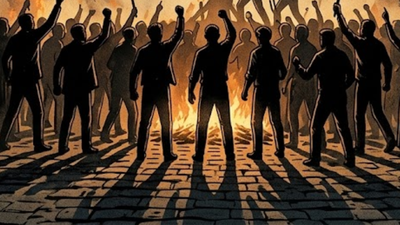
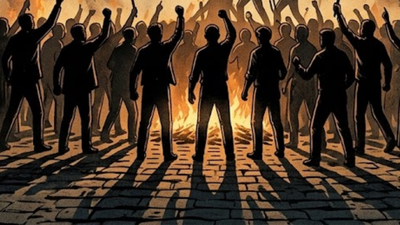
AI image used for representational purpose
By-Amrit PattojoshiFrom a psychiatrist’s perspective, mob lynching is not simply a matter of law and order; it is deeply rooted in the psychology of crowds, emotional contagion and the breakdown of individual responsibility. Understanding these mechanisms is crucial if society is to prevent such tragedies.It is a grim reminder that mob lynching is not simply about crime but about the psychology of collective behaviour. Unless society invests in emotional education, responsible digital practices and stronger community leadership, such tragedies will continue to take place. Violence thrives when outrage is unchecked, but it can be curbed when individuals are taught to pause, reflect and remember that justice belongs to institutions, not mobs.One of the most significant psychological processes at play is de-individuation. In the anonymity of a mob, individuals lose their sense of personal identity and accountability. Actions that would be unthinkable in isolation suddenly feel permissible when submerged in a crowd. This disinhibition is often reinforced by emotional contagion, where fear, anger, or humiliation spreads rapidly, magnified by shouting, rumours, or viral videos. Once emotions dominate, rational thought is replaced by instant moral judgement, where guilt is assumed without evidence and punishment is meted out impulsively.Another critical factor is diffusion of responsibility. When everyone is participating, each person feels less individually accountable, believing “everyone is doing it.” This collective mindset emboldens violent behaviour. The role of social media amplification cannot be overstated either. Viral misinformation and emotionally charged content fuel paranoia, suspicion and revenge impulses, often transforming isolated anger into mass hysteria.Preventing such incidents requires a multi-layered approach. First, emotional regulation education must be integrated into schools and colleges, teaching anger management, conflict de-escalation, digital literacy and empathy. Second, a rapid police response is essential, as mobs grow bolder when authority is absent. Third, public awareness campaigns must reinforce that accusations are not proof and punishment belongs to the legal system, not to crowds. Fourth, responsible social media behaviour is now a public mental health issue as forwarded rumours and provocative videos often act as triggers. Fifth, community leadership is vital, with local leaders and influencers discouraging vigilante justice. Finally, reducing societal aggression by addressing violent content, polarising narratives, humiliation culture and public shaming can help desensitised communities rediscover empathy and restraint.(The writer is a psychiatrist)