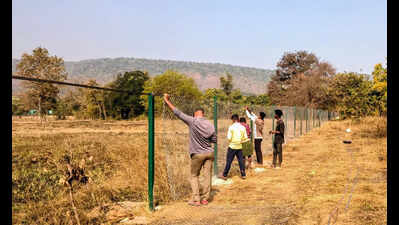
Bhubaneswar: Debrigarh wildlife sanctuary has begun iron mesh fencing to keep the landscape protected from poaching activities while maintaining a 120-km-long barrier between it and 150 villages.This will also to pave the way for the much-awaited tiger translocation in the sanctuary.“Wire mesh fencing along the sanctuary borders isn’t about confining wildlife; it is meant for reducing conflict along the edges where human and animal both co-exist. In Debrigarh, these boundaries are especially sensitive because of frequent straying of animals from sanctuary to agricultural fields, leading to targeted electrocution, poaching by chocolate bombs, traps and snares. Fencing acts as a soft barrier that discourages entry, reduces crop damage, livestock loss and risk to people,” says Anshu Pragyan Das, divisional forest officer, Hirakud wildlife division.Wildlife officials said fencing from pillar 1,007 to Majurmara, covering a length of 2.6km adjoining Khajuria village, has been completed. The landscape being vulnerable to poaching, the authorities decided to initiate the work from this stretch.“The villagers in this belt protested against solar fencing earlier as they are dependent on the sanctuary for firewood collection. They later gave consent to the wire mesh fencing option. Entry for collection of firewood from the peripheral part of sanctuary will be monitored by the eco development committee (EDC) members as well as by sanctuary authorities,” said the DFO.Officials said fencing work has been designed without compromising wildlife corridors, after sufficient community awareness for habitat management. This has been possible after three years of village-level meetings.The wildlife officials said wire mesh also prevents wildlife retaliation, especially when the tiger translocation programme is gaining pace and prey animal translocation programmes like spotted deer translocation are already being taken up.“Wire mesh fencing also limits poaching and illegal access, making it harder for unauthorised people to enter, helping forest staff monitor and control access points. It will safeguard the fragile habitats wherever there is grazing pressure. It gives us a defined perimeter, making patrolling and conservation planning more effective,” Das said.