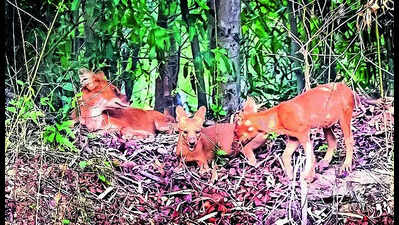
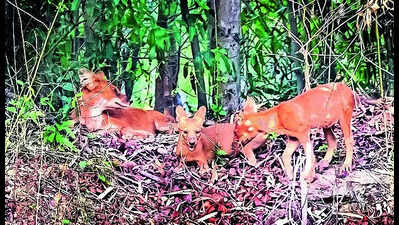
Indian dhole spotted with 2 pups at Debrigarh
Bhubaneswar: In a rare success of conservation breeding of endangered Indian dhole (wild dog), Debrigarh wildlife sanctuary authorities spotted two pups with their mother in the forest. Earlier, the mother Indian dhole was sighted with a male dhole several times.DFO, Hirakud wildlife division, Anshu Pragyan Das, said the mother was first recorded moving with a three to four-month-old pair of dhole pups, which were caught in camera trap while moving on footpaths, in May third week.“Following the sighting, 26 camera traps have been strategically placed to record their further movement. A deer kill was also recorded within their resting area, indicating active hunting ability. These observations may mark the early foundation of a future pack, and signal the ecological suitability of Debrigarh for the return of this endangered carnivore,” said Das.The wildlife authorities said it was interesting to note that the dhole pair in Debrigarh was observed breeding even without the presence of a larger pack, a slightly uncommon but remarkable sign of adaptation and survival. “Protection and monitoring measures have been strengthened in and around the sanctuary to bring down disturbance around the breeding area,” Das said.Principal chief conservator of forests (wildlife) Prem Kumar Jha said Debrigarh has recorded a significant conservation milestone with successful breeding of dholes. “The birth of the pups indicates favourable habitat conditions, ensured protection, adequate prey availability and ecological security within the landscape,” Jha said.In Debrigarh, a lone Indian dhole was first caught in camera trap moving inside the sanctuary in Oct 2023. Its sex was not known then. Two years later, it was found with a mate. “The pair of wild dogs began moving together across the grasslands and hills of the sanctuary, covering more than 100sqkm area for more than two years until the beginning of 2026, when their movement gradually became confined to a smaller area of the core, possibly due to the female dhole’s advanced stage of gestation,” the DFO explained.Debrigarh authorities said movement of the pups and the mother near water bodies and salt licks is being carefully regulated, while frontline staff are maintaining regular surveillance to ensure their safety.Wildlife officials said efforts are on to maintain a healthy prey base and reduce potential threats from feral dogs, disease transmission or human interference in the bordering areas to secure the core. Such precautionary measures are crucial during the early stages of pup rearing.India is known to have around 2,500 Indian dholes, mostly in Western Ghats, central Indian forests and the Northeast.