

Anxiety Follows Athletes To Bhubaneswar As West Asia Conflict Shadows Beach Volleyball TourBhubaneswar: Competition travelled. So did fear. Israel’s beach volleyball pair Eylon Elazar and Kevin Cuzmiciov arrived in Bhubaneswar chasing points on the global tour. They leave with a bronze medal — and days of worry over a widening US-Israel-Iran conflict that has shaken air travel, unsettled athletes and forced teams to rethink their journeys.Players competing thousands of kilometres away from West Asia tried to focus on serves and spikes, but phones, news alerts and family messages became constant distractions.Elazar and Cuzmiciov nearly missed the tournament altogether. “We were on one of the last two flights coming out of Tel Aviv before they closed the airspace,” Elazar said. “Then in Abu Dhabi we waited for two days after which we took one of the 15 flights departing from there and came to Bengaluru.”What followed was a mental balancing act — focusing on rallies and tactics while keeping track of developments back home. “It’s not the first time it’s happening to us,” Elazar said after the tournament ended Sunday. “We’ve played in this kind of situation, so we have the experience to handle it. We also have the support of each other, the federation and our mental coach.”
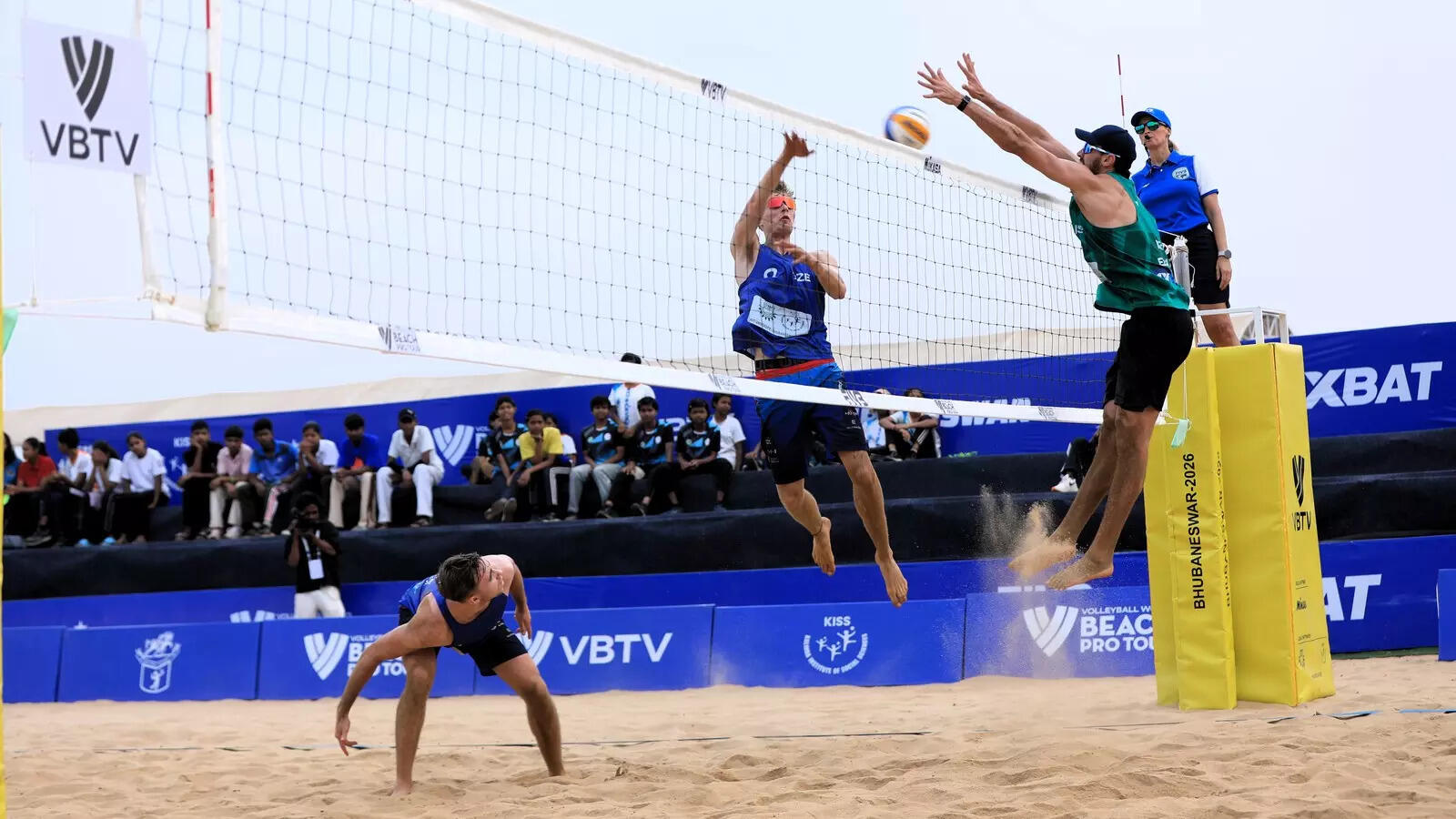
Action during one of the matches in Bhubaneswar (KIIT & KISS Sports)
Sports psychologists have become a crucial part of modern sport. For athletes facing global travel disruptions and war back home, that support has turned essential. “I think we made good progress with the mental coach,” Elazar said. “We speak once a week minimum. It’s free for us but mandatory.”Travel chaos thinned out the tournament field. Originally, athletes from 52 countries were expected for the FIVB Volleyball World Beach Pro Tour Challenge. In the end, about 100 participants from roughly 30 nations managed to reach Bhubaneswar.Coaches said mental preparation rivals physical training. “We talk and try to motivate them,” Turkey coach Adem Mert said. “But in the end the players are alone on the court and they need to handle the problems.” His team, like many others, keeps in touch with a psychologist online. “Even coaches can have some sessions when needed,” Mert said.For American teams, travel uncertainty has become a new source of stress. US coach Edward Keller said: “How can we fly around the world to play competitions with these airspaces getting interrupted?” Six US teams — three men’s and three women’s — reached Bhubaneswar. More were expected but could not travel because of visa complications and conflict-linked disruptions. “It’s uncertain how safe it’s going to be in different parts of the world,” Keller said. “War can just happen at any time for no good reason.”For others, the journey home looks daunting. Danish pair Nicolai Hovmann Overgaard and Jacob Stein Brinck face a marathon route after scrapping their original tickets following a semi-final run.“We will fly from Bhubaneswar to Mumbai, then from Mumbai to Baku,” Brinck said. “From Baku we go to Tbilisi, then to Istanbul and Copenhagen before finally heading home.”Players across national lines described the global volleyball circuit as a tight-knit family. That sense of solidarity deepened after reports from Iran’s Fars province said a missile strike on a sports hall killed 20 young women volleyball players during training. International volleyball authorities said they were “shocked and extremely concerned.”In Bhubaneswar, matches were held under clear skies and loud cheers from spectators. Yet thoughts often drifted thousands of kilometres west. Rallies ended. Phones lit up again. The hope across courtside benches was simple — calmer skies in West Asia, safer flights home, and a return to worrying only about the next serve.