
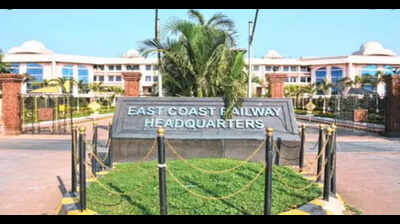
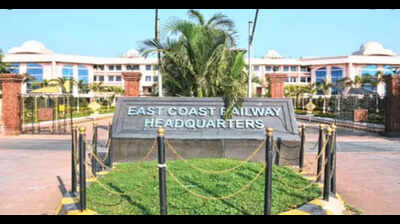
Bhubaneswar: East Coast Railway (ECoR) has saved Rs 8.34 crore in 2025-26 financial year and reduced carbon dioxide (CO2) emission by 10,406 tonnes by installing solar panels at its stations, residential quarters and offices to reduce electricity consumption, official sources said on Saturday. Now, it is planning to install solar panels at 59 stations in Odisha after their redevelopment, said a spokesperson of the ECoR.According to official data, the ECoR installed a cumulative 27 MWp of solar capacity between 2016 and March 2026. This has helped the zone generate over 12.24 million units (MU) of solar power.“The ECoR has made steady strides in its push towards clean energy, installing nearly 27 MWp of solar power capacity over the last decade, leading to significant savings in energy costs and a sharp reduction in carbon emissions,” said a senior railway official.The renewable energy drive picked up momentum from 2020-21, with large-scale installations across stations, service buildings and other railway infrastructure, official sources said.In 2024-25 alone, ECoR added 3,534 kilowatts peak (kWp) of solar capacity, taking the cumulative installation to 9.6 MWp by the end of the financial year. During the same period, solar plants generated 5.98 MU of electricity, helping save over 5,000 tonnes of CO2 and cut energy expenditure by around Rs 3.58 crore.Data show that solar generation rose steadily from just 0.01 MU in 2015-16 to more than 12 MU cumulatively by early 2026. The biggest jump in capacity addition came in 2020-21, when ECoR added 2,843 kWp in a single year.Railway officials said the transition to solar energy aligns with Indian Railways’ broader goal of achieving net-zero carbon emissions and reducing dependence on conventional power sources.“With solar installations continuing under ongoing phases, ECoR is expected to further enhance green energy generation in the coming years, contributing to both environmental protection and long-term cost efficiency,” said the spokesperson.