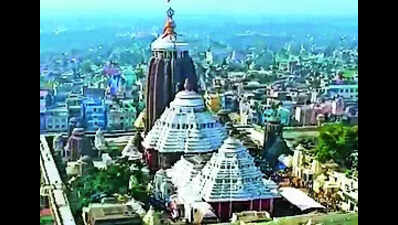
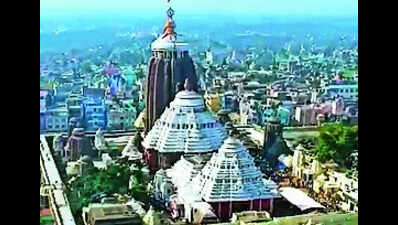
Bhubaneswar: Amid the buzz and mystery surrounding the detection of suspected tunnel-like structures in the ground penetrating survey (GPR) around Puri Jagannath Temple, historians and archaeologists said such structures were an integral feature of the mutts that were established near the 12th century shrine.The draft GPR report, submitted by IIT Gandhinagar to Odisha Bridge & Construction Corporation, detected a colossal feature of 6m width and nearly 90m long, which seemed to be an underground network — an ancient drainage system or a tunnel-like feature — in the south-east area of the temple.Another similar feature was found near Budhimaa temple. The finding reinforces the likelihood of an extensive network of such underground structures surrounding the temple, experts said, adding that such tunnels served multiple purposes over time, including movement of kings, mahants, sevayats and even warriors from the palace and mutts to the temple and possibly to safeguard the shrine during periods of vulnerability.Historian Surendra Kumar Mishra said at least seven ancient tunnels can still be seen under the mutts (below the ground level), including the Ganga Mata Mutt, located about 600m south of Jagannath Temple, and Radhakanta Mutt, with passages believed to extend towards the temple and the sea.“References to such tunnels appear in historical texts and local accounts. During periods of invasion in the past, when the Singhadwar remained closed, such tunnels were used by kings, sevayats and mahants to ensure the continuity of worship of the sibling deities and for their protection,” Mishra said.These structures, he added, also served as part of a well-planned security network for the deities. “Such was its effectiveness that despite facing 18 attacks, the Jagannath Temple was neither damaged nor the idols could be desecrated,” he added.Kailash Das, an expert on Jagannath culture, also pointed to an underground passage linking Ganga Mata Mutt to Jagannath Temple. “Chaitanya Charitamrita (book on the life and teachings of Chaitanya Mahaprabhu) mentions about a tunnel which was used by Sarvabhauma Bhattacharya (who had established Ganga Mata Mutt) to take Chaitanya from the mutt to the temple,” Das said.Historians said the exterior of 19 mutts surrounding Jagannath Temple were demolished for the Parikrama project, but no excavation was done to see what lies underneath these structures. “Jagannath Temple was built over a period of time and there is all possibility that the current shrine is standing over scattered archaeological remains of smaller temples and mutts. Also, the ground level has gone up, burying sculptural heritage underneath,” Mishra said.The ASI had written to the govt about possible presence of ancient platforms, tunnel-like structures during deep excavation of the Parikrama site in 2022.While a section of researchers called for a scientific excavation and detailed assessment of the draft GPR report, others felt archaeological investigation of the area is not feasible in the present situation.“Since Puri is a living city and the 75m radius around Jagannath Temple is a functional area, excavation is not possible. Moreover, such excavations typically take a minimum of 7-8 years to reach a valid conclusion, which is unthinkable at present,” archaeologist Sunil Patnaik said.