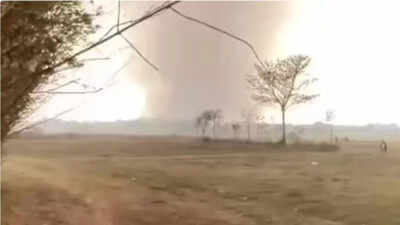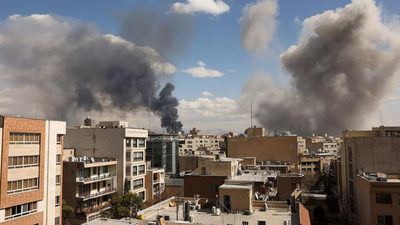

As the Iran-Israel-US conflict entered its seventh day, Tehran escalated the battlefield by launching ballistic missiles equipped with cluster munition warheads.Unlike conventional missiles that explode in a single blast, these weapons burst open mid-air, scattering dozens of smaller explosive bomblets across a wide area. Videos circulating on social media appeared to show what could be sub-munitions from an Iranian cluster warhead falling over Israel during a ballistic missile attack.In the footage, several glowing objects can be seen descending separately across the sky, spreading out over a wide area before hitting the ground.
What are
Cluster bombs are weapons designed to release many smaller explosive devices, known as submunitions or bomblets, from a single missile, rocket or aircraft bomb.Once the main warhead opens in the air, the bomblets spread across a large area and detonate on impact. Because they are designed to cover wide zones rather than strike a single target, cluster munitions are considered among the most controversial weapons used in modern warfare.
What are cluster bombs ?
Cluster bombs are weapons designed to release many smaller explosive devices, known as submunitions or bomblets, from a single missile, rocket or aircraft bomb.Once the main warhead opens in the air, the bomblets spread across a large area and detonate on impact. Because they are designed to cover wide zones rather than strike a single target, cluster munitions are considered among the most controversial weapons used in modern warfare.
Key features of cluster bombs
- Cluster munitions are designed to hit multiple targets at once. When the warhead bursts open, dozens of bomblets scatter over a large area, increasing the chances of damaging vehicles, infrastructure or troop formations.
- The main missile or bomb breaks apart at high altitude, releasing smaller explosives that fall across a wide radius before detonating.
- Because the bomblets spread over a broad area, they cannot precisely distinguish between military and civilian targets. This has drawn strong criticism from humanitarian groups.
- Cluster warheads can also complicate missile defence systems. Instead of intercepting a single incoming object, systems such as Israel’s Iron Dome or Arrow must track and attempt to stop multiple falling submunitions at once, increasing the chance that some may slip through.
- One of the most serious risks comes from bomblets that fail to explode on impact. These unexploded submunitions can remain on the ground like hidden landmines, posing long-term threats to civilians and emergency responders even years after a conflict ends.