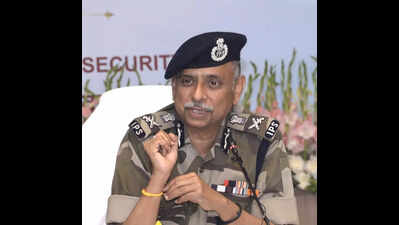
On the eve of its 57th Raising Day, CISF director-general Praveer Ranjan speaks with Debabrata Mohapatra about how the central armed police force is adapting to new-age security challenges.Q: What is CISF’s current deployment in Odisha?A: At present, we have 15 units stationed across the state, securing critical installations such as the Biju Patnaik International Airport, major ports, defence establishments and govt PSUs. Q: Any specific plans for Odisha? A: I met the chief minister of Odisha on Monday and requested land to establish a dedicated battalion in the state. We also intend to provide training support to personnel of the Odisha Industrial Security Force (OISF). In addition, CISF will soon take over security responsibilities at ArcelorMittal Nippon Steel India’s plants in Paradip (Jagatsinghpur) and Dabuna (Keonjhar), as well as NLCIL’s thermal power plant at Tareikela in Jharsuguda district. Q: Odisha is keen to promote a port-based blue economy. How do you see CISF’s role? A: The Centre has recently approved the creation of the Bureau of Port Security (BoPS), modelled on the Bureau of Civil Aviation Security. BoPS will oversee vessel and port facility security nationwide. CISF has been designated as a Recognised Security Organisation (RSO) for ports, with the responsibility of conducting security assessments and preparing security plans. To meet this mandate, we are building a dedicated vertical for port security with around 10,000 trained personnel. Additionally, CISF has been tasked with training private security agencies engaged in port security, with programmes already underway in Kochi, Chennai and Mumbai. Q: How is CISF preparing for evolving security threats in India?A: Aerial security has become a top priority. We have established a drone training and anti-drone capability centre at Maharana Pratap Regional Training Centre, Behror, Rajasthan. The ministry of home affairs has approved the setting up of a remote pilot training organisation to train personnel in drone operations and counter-drone systems. Anti-drone systems are being installed at airports, and CISF has been designated as the nodal agency for aerial threat management at vital installations. Q: What are the plans to strengthen aviation security?A: Technology infusion is at the heart of our aviation security roadmap. We are introducing advanced full-body scanners, AI-driven video analytics, cyber commandos for digital defence, integrated command centres with CCTV analytics, biometric access control and AI-enabled data systems. These measures will make airport security smarter, faster and more resilient. Q: What are the immediate focus areas? A: We are developing domain experts in critical fields such as cyber security, data science, aviation security, battle craft, weapons and tactics, anti-drone solutions and fire management. These specialists will undergo advanced training and act as knowledge drivers, ensuring CISF stays ahead in technology and expertise. Q: CISF’s welfare measures?A: Our new HR policy highlights work-life balance. For the first time, covering 98% of personnel, CISF introduced choice-based postings allowing personnel with 10+ years of service to list 10 preferred locations. Due to change in posting policy, the satisfaction level among the personnel has risen to 87%.